Your Practical Guide to Postural Neck Pain
A neck that feels stiff by mid-morning, a tight band across the shoulders, or a headache that arrives after a long screen session can make work and home life feel unnecessarily hard. This guide to postural neck pain explains what may be driving those symptoms, the practical changes that tend to help, and when hands-on assessment is the sensible next step.
Postural neck pain is common, particularly among people who spend long periods at a laptop, drive regularly, use a phone between meetings, or train hard at the weekend after a sedentary week. It is rarely about having one "bad" posture. More often, it reflects a body that has been asked to stay in one position for too long, too often, without enough movement variety or recovery.
1. Understand what postural neck pain actually means
The neck is designed to move. Its joints, muscles, nerves and connective tissues work with the upper back, ribcage, shoulders and jaw to let you look around, breathe, carry bags and use your arms. When we remain in a fixed position - perhaps leaning towards a screen or cradling a phone - the muscles around the neck and shoulder girdle must work continuously at a low level.
Over time, this can create muscular fatigue, sensitivity and a feeling of restricted movement. Common patterns include pain at the base of the neck, aching into the upper trapezius muscles, stiffness when turning your head, and tension-type headaches. Some people notice that symptoms build through the day, while others wake stiff because their neck has not recovered well overnight.
It is helpful to avoid blaming yourself or your posture. Sitting upright and perfectly still is not the answer either. The most supportive posture is usually the next posture: regular, comfortable changes in position give your tissues a break.
2. Look beyond the desk setup
A workstation can contribute to neck discomfort, but it is only one part of the picture. We assess postural neck pain in the context of your everyday biomechanics and your wider routine. A screen that is too low may matter, but so might a rushed commute, poor sleep, workload pressure, reduced exercise after an injury, or a demanding gym programme that leaves the shoulders constantly guarded.
Stress is particularly relevant. It does not mean the pain is "all in your head". When we are under pressure, it is common to breathe more shallowly, tense the jaw, lift the shoulders and move less. This can amplify genuine muscular and joint sensitivity around the neck.
Consider the pattern rather than one isolated trigger. Does your neck tighten after video calls? Does it flare after gardening, swimming or a long drive? Does a headache follow a particularly busy week? These details give useful clues about which loads your body currently tolerates and where a gradual plan can help.
3. Make your work area easier on your neck
You do not need an expensive office overhaul to improve desk mechanics. Small adjustments can reduce unnecessary strain, especially when combined with regular breaks.
Aim to position your main screen roughly at eye level, directly in front of you, so you are not repeatedly looking down or rotating your head. If you work from a laptop, raising it on a stable surface and using a separate keyboard and mouse can be worthwhile. Keep the keyboard close enough that your elbows can rest comfortably by your sides, rather than reaching forwards with rounded shoulders.
Your chair should support a relaxed, workable position, with feet supported on the floor or a footrest. However, the key is not to hold this position rigidly for eight hours. If your work involves two monitors, place the primary screen in front of you and avoid spending all day turned towards one side.
Phone habits deserve attention too. Repeatedly looking down at a handset can be more provocative than a well-arranged desk. Bring the phone closer to eye level when possible, use voice notes or a headset for longer calls, and avoid trapping it between your ear and shoulder.
4. Build movement breaks into the day
For many desk-based professionals, one focused exercise session cannot fully offset a day spent motionless. Short, frequent movement breaks are often more realistic and more effective for postural neck pain.
Every 30 to 60 minutes, stand up, walk to get water, roll your shoulders, or look away from the screen. The goal is not a flawless routine. It is simply to give your neck, eyes, upper back and hips a different job to do.
Try this gentle reset two or three times during the working day:
1. Sit or stand tall without forcing your shoulders back.
2. Slowly turn your head to look over one shoulder, then the other, staying within a comfortable range.
3. Gently nod your chin down and return to neutral.
4. Roll both shoulders backwards several times, then take a slow breath into the lower ribs.
These movements should feel easy, not like a test of flexibility. Sharp pain, dizziness, tingling or worsening arm symptoms are signs to stop and seek clinical advice rather than push through.
5. Strengthen the areas that support your neck
Stretching can feel relieving, but it is not always enough on its own. If your upper back, shoulder blade and deep neck muscles have become deconditioned, building their capacity can make daily tasks feel easier over time.
The best approach depends on your starting point. Someone recovering from a painful flare may need gentle mobility and low-load exercises first. A regular gym-goer with recurring symptoms may benefit more from reviewing training volume, rowing and pulling technique, overhead work, and recovery between sessions.
Useful programmes often include controlled upper-back extension, shoulder blade strength, gradual neck endurance work and general aerobic activity such as walking or cycling. These exercises need to suit your symptoms and medical history. More is not automatically better: heavy shrugging, aggressive neck stretching or repeatedly forcing a stiff neck to click may aggravate an already sensitive area.
6. Take headaches, sleep and recovery seriously
Neck-related tension headaches often feel like pressure around the temples, forehead or back of the head, sometimes alongside sore upper shoulders. They can be influenced by sustained screen work, stress, hydration, sleep position and jaw tension. They still deserve proper assessment, particularly if headaches are new, severe or changing.
For sleep, there is no single perfect pillow. The aim is to keep your neck reasonably supported in your preferred position, rather than sharply bent to one side. Side sleepers may need enough pillow height to fill the gap between shoulder and head; back sleepers often prefer a lower profile. If you regularly sleep on your front, reducing the amount of head rotation can be helpful, though changing a long-established sleep position takes time.
Recovery also includes the basics: varied movement, adequate rest, sensible training progression and enough nourishment to support activity. We do not need perfection in any of these areas. Small, repeatable improvements tend to be more sustainable than an ambitious plan abandoned after a week.
7. Know when to book an assessment for neck pain
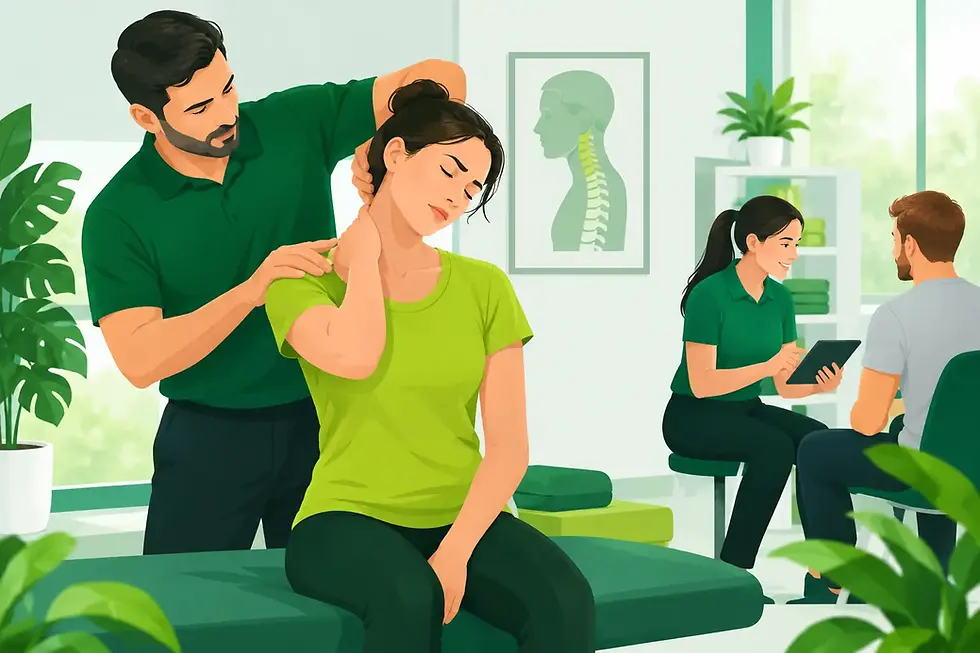
A musculoskeletal assessment can help when pain keeps returning, limits work or exercise, causes recurring headaches, or has not improved with sensible self-management. An osteopath can assess how your neck, upper back, shoulders and movement habits are interacting, then create a plan that may include hands-on treatment, mobility work, exercise advice and practical workstation changes.
At Hartwood Health, osteopathy and targeted sports massage can be used together where appropriate. Osteopathy focuses on the wider biomechanics behind your symptoms, while sports massage may help address muscular tension and soft-tissue sensitivity. Neither should be presented as a one-off fix: the most useful care gives you a clear route back to confident, independent movement.
Seek urgent medical advice if neck pain follows a significant injury, or occurs with severe or sudden headache, fever, unexplained weight loss, worsening balance, changes to speech or vision, facial weakness, or persistent numbness and weakness in an arm or hand. These symptoms are uncommon, but they need prompt assessment.
Postural neck pain does not mean your body is fragile or permanently out of alignment. It is often a sign that your current mix of work, movement, training and recovery needs adjusting. With a calmer workspace, more frequent movement and the right support when symptoms persist, your neck can become much more capable of handling everyday life.
Joined-Up Care for Lasting Physical Freedom
At Hartwood Health, we look beyond the immediate symptom to treat the person attached to it. True physical resilience requires a balance between structural alignment, everyday biomechanics, and systemic health.
Our Osteopathy Team specialises in relieving acute pain and restoring mobility for busy professionals and active adults alike. By working closely alongside our clinical dietitians and other wellbeing practitioners, they provide a truly "joined-up" approach to physical health.
Visit our hands-on clinic in Fleet to start your journey back to comfortable, confident movement.