Mobility Versus Flexibility Training Explained

A deep squat that feels blocked, a stiff neck after a day at the laptop, or hamstrings that pull during a weekend run can all prompt the same question: should you stretch more? Mobility versus flexibility training is often presented as a choice, but they address different parts of movement. Understanding that difference helps us choose exercises that support the way your body actually needs to move.
1. What flexibility training changes
Flexibility is the available length of a muscle or group of tissues. Put simply, it is how far a joint can move when an outside force assists it, or when you hold a position without much muscular effort.
A classic hamstring stretch is a good example. Sitting with one leg out straight and leaning forwards may improve your tolerance to that lengthened position over time. This can be useful if a specific muscle group feels persistently tight, or if limited length is genuinely restricting a movement that matters to you.
Static stretching, where a position is held for around 20 to 60 seconds, is one common flexibility method. Gentle, regular practice can improve range of motion. It can also feel calming after long periods of sitting or following exercise.
But feeling a stretch is not always evidence that a muscle is short. Muscles may feel tight because they are tired, guarding a sensitive area, adapting to prolonged posture, or working hard to create stability elsewhere. Stretching a painful or irritated structure repeatedly may therefore provide only short-lived relief, and occasionally aggravate symptoms.
Flexibility also has context. A gymnast may need a very different range of motion from someone who wants to carry their child comfortably, garden at the weekend, or return to running after a calf strain. More range is not automatically better. Useful range is range you can control.
2. What mobility training adds
Mobility is the ability to actively move a joint through its available range with control. It brings together joint movement, muscle strength, coordination, balance and the nervous system's confidence in that movement.
Think of lifting your knee to step over a gate, reaching overhead to place luggage on a shelf, or lowering into a squat and standing back up. These are mobility tasks. They require more than passive looseness: the body needs to organise force, maintain balance and respond to the demands of the task.
For this reason, mobility work often uses active movements. Controlled hip rotations, ankle rocks, thoracic spine rotations and slow shoulder circles can help you explore range while teaching the surrounding muscles to support it. Strength exercises performed through an appropriate range, such as split squats, calf raises or rows, can also build mobility.
This does not mean every mobility drill is suitable for every person. If you have acute pain, recent injury, significant joint swelling, numbness, progressing weakness, or pain that travels down an arm or leg, a generic online routine is not the right starting point. An individual assessment can identify whether the limitation is primarily related to tissue sensitivity, joint mechanics, load tolerance, strength or something else.
3. Mobility versus flexibility training: the practical difference
The simplest distinction is this: flexibility describes range, while mobility describes controlled use of that range.
Someone may be flexible enough to pull their knee high towards their chest with their hands, but struggle to hold it there on one leg without wobbling. They have passive range but less active control. Equally, a cyclist or desk-based professional may have reasonable flexibility but find their upper back stiff when rotating to reverse the car. The issue may be reduced movement variety, joint stiffness, reduced strength or protective muscle tension rather than a need for longer muscles.
Both approaches have a place. Flexibility training can be helpful where a specific restriction is relevant and the stretch is comfortable. Mobility training is usually the better fit when your goal involves everyday function, exercise performance, injury rehabilitation or confidence in a movement.
There is also a timing consideration. Long, intense static stretches immediately before explosive activity may not suit everyone, particularly if they leave you feeling less springy. A short active warm-up is often more useful before a run, match or strength session. Static stretching may sit better after training or as a separate, gentle session. The best choice depends on your activity, symptoms and response.
4. Five movement checks that can guide your training
You do not need to diagnose yourself at home, but noticing patterns can help you train more thoughtfully and describe your concerns clearly in an appointment.
The squat: Can you lower towards a chair and stand up without your heels lifting, knees collapsing in, or pain stopping you? Restrictions may involve the ankles, hips, trunk control or confidence under load.
The overhead reach: Can you raise both arms without shrugging sharply, arching through the lower back or reproducing shoulder pain? Shoulder mobility depends on the upper back, ribcage and shoulder blade as well as the shoulder joint.
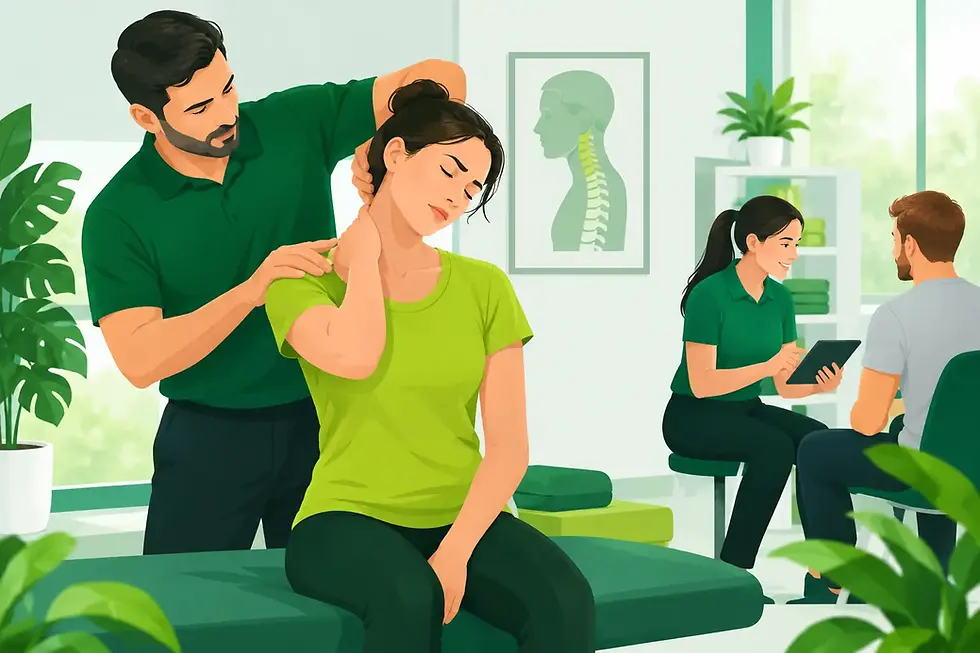
The rotation check: Can you turn your head to check behind you when driving, or rotate through the upper body when walking? A stiff neck is not always a neck-only problem. Desk setup, stress, upper-back movement and sleep can all contribute.
The single-leg balance: Can you stand on one leg while putting on a shoe or climbing stairs? This reflects ankle and hip control, balance and strength as much as flexibility.
The next-day response: Do you feel settled after movement, or more irritated for 24 hours afterwards? Your recovery response is valuable information. A programme should challenge you without repeatedly flaring symptoms.
These checks are not pass-or-fail tests. Bodies differ in shape, previous injury, age, training history and natural joint range. The aim is comfortable, capable movement for your own life, not achieving a social-media version of perfect form.
5. A realistic way to build mobility
For busy professionals, the most effective programme is usually the one that fits around work, family and training. Ten focused minutes, three or four times per week, is often more sustainable than an ambitious hour that never happens.
Begin with two or three areas that relate to your goals. If you sit for much of the day and feel stiff through the upper body, try gentle thoracic rotations, shoulder blade movements and a supported squat pattern. If running leaves your calves and hips feeling restricted, use ankle rocks, controlled hip circles and slow calf raises. Work in a comfortable range and move with steady breathing rather than forcing an end position.
Then add strength. This is the overlooked bridge between gaining range and keeping it. A hip may move further after a mobility drill, but it needs enough capacity to control that range when you run, lift, climb stairs or change direction. Gradually loaded exercises, chosen for your needs, teach the body that the new movement is safe and useful.
You can also make your day less static. A short walk between meetings, alternating sitting and standing, taking calls while moving, and varying your position are small changes that often matter more than one intense stretching session. Movement is not a punishment for sitting. It is simply useful input for a body designed to change position regularly.
6. When hands-on assessment can help
Persistent stiffness deserves a little curiosity, particularly if it is paired with pain, headaches, sciatica-like symptoms, recurring sports injuries or reduced confidence in daily activities. The goal is not to chase every click or asymmetry. It is to understand what is limiting you and create a plan that fits your health, work and training demands.
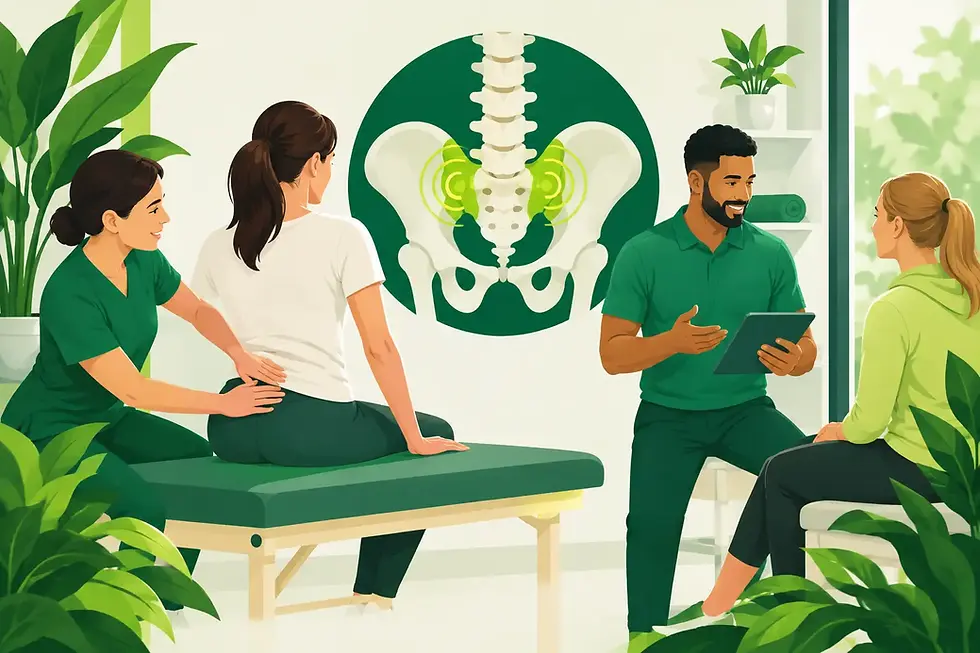
At Hartwood Health, osteopathic assessment considers the wider picture: biomechanics, soft-tissue tension, previous injuries, work setup, sleep, stress and the activities that matter to you. Where appropriate, hands-on treatment and sports massage can help settle muscular tension and support movement, but they work best alongside practical rehabilitation rather than as a temporary fix.
The right mobility or flexibility plan should leave you feeling more capable, not judged for being stiff. Start with the movement you want to make easier, build control patiently, and let consistency do the useful work.
Joined-Up Care for Lasting Physical Freedom
At Hartwood Health, we look beyond the immediate symptom to treat the person attached to it. True physical resilience requires a balance between structural alignment, everyday biomechanics, and systemic health.
Our Osteopathy Team specialises in relieving acute pain and restoring mobility for busy professionals and active adults alike. By working closely alongside our clinical dietitians and other wellbeing practitioners, they provide a truly "joined-up" approach to physical health.
Visit our hands-on clinic in Fleet to start your journey back to comfortable, confident movement.