The Glute-Lower Back Connection Explained

Your lower back may start complaining halfway through a long meeting, when you stand from the car, or the morning after a run. It is tempting to blame one tight muscle or a ‘weak core’, but the glute-lower back connection is usually more layered than that. Your hips, pelvis, trunk, daily habits, training load and stress levels all influence how comfortably you move.
For many people, lower back pain is not a sign that something is damaged or out of place. It can be a sensitive, overloaded area that has been doing more work than it currently tolerates. Looking at the glutes as part of the wider movement system can help us make sense of the pattern - and create a practical route back to confidence.
1. What is the glute-lower back connection?
The gluteal muscles are not simply there for squats, stairs and running. The gluteus maximus helps extend the hip, such as when rising from a chair or walking uphill. The gluteus medius and smaller muscles around the hip help control the pelvis when you stand on one leg, walk or change direction.
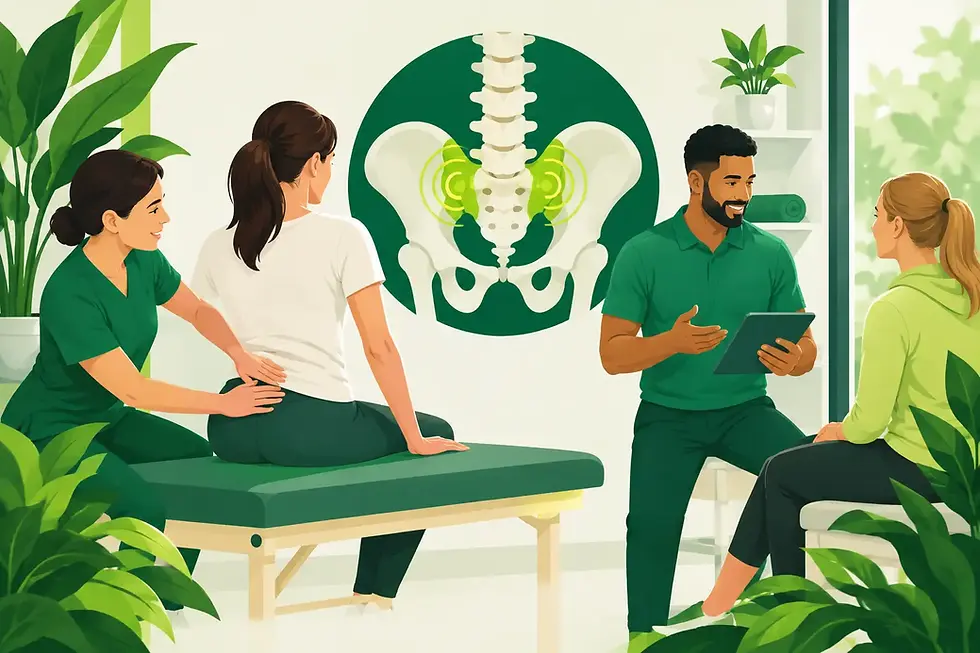
The lower back, pelvis and hips are closely connected through joints, muscles and connective tissue. When the hips move well and the glutes contribute effectively, the lower back does not have to create all the movement or stability alone. This is not about making the back completely still. Healthy backs are designed to move. It is about sharing load across the body in a way that feels manageable.
If your hip movement is restricted, your glutes fatigue quickly, or your activity suddenly exceeds what you are used to, the lower back may become more involved. That can feel like aching, stiffness, a pulling sensation above the buttock, or discomfort during everyday tasks such as bending, lifting or getting out of bed.
2. Why sitting can make the pattern more noticeable
Sitting is not inherently harmful, and perfect posture is not a realistic target. The issue is often duration rather than one ‘wrong’ position. After several hours at a desk, in the car or on the sofa, the hip flexors are held in a shortened position and the glutes have relatively little to do. Standing up and immediately asking the body to lift, sprint or garden can feel like a sharp change of demand.
Desk-based professionals often notice a familiar sequence: an ache builds through the low back by late afternoon, the hips feel stiff when standing, and exercise feels better after a long warm-up. This does not prove that the glutes have ‘switched off’. Muscles do not simply stop working. More commonly, it suggests your body would benefit from more frequent changes of position, gradual loading and a movement strategy that fits your working day.
Stress and poor sleep can also turn the volume up on pain. When you are under pressure, you may brace through your back, move less freely and recover less well between training sessions. A useful plan therefore needs to consider more than exercises alone.
3. Signs your hips and glutes may be contributing
Lower back pain has many possible causes, so no single sign can diagnose the source. However, the following patterns can be useful clues to discuss with an osteopath or other qualified clinician:
Pain is worse after prolonged sitting but eases after gentle walking or changing position.
You feel discomfort when climbing stairs, rising from a low chair or walking uphill.
One side of the pelvis, buttock or lower back consistently feels more tired or tight.
Your back aches during squats, deadlifts or running, particularly after a recent increase in intensity, distance or volume.
You struggle to balance on one leg, or your pelvis visibly drops to one side when walking or stepping down.
These signs do not mean you need to stop being active. They may indicate that the task needs adjusting for now. Pain during a movement is information, not a personal failure. We can use it to find an appropriate starting point.
4. Build capacity rather than chasing ‘activation’
Social media often promotes a quick fix: activate the glutes, stretch the hip flexors, and your back pain will disappear. A short warm-up may help some people feel more prepared, but lasting improvement usually comes from progressively improving tolerance to the movements your life requires.
Start with comfortable, repeatable movement. Walking is often an excellent foundation because it asks the hips, glutes and trunk to work together without excessive load. If you have been sedentary, several short walks across the day may be more useful than one ambitious weekend session.
From there, simple strength work can be introduced. Sit-to-stands, supported split squats, bridges, step-ups and hip hinges can all be useful options, depending on your symptoms, fitness and goals. The best exercise is not the one with the most impressive name. It is the one you can perform with good control, at an appropriate dose, and progress over time.
A helpful rule is to keep exercise discomfort mild and short-lived. Some muscular effort or temporary sensitivity can be normal when returning to activity. Pain that becomes sharp, spreads, significantly worsens afterwards or remains elevated into the next day is a sign to reduce the range, load, repetitions or frequency. If you are unsure, individual assessment is far more useful than pushing through a generic programme.
5. Use movement breaks that work in real life
You do not need an elaborate desk routine every hour. Consistency matters more than complexity. Stand for a phone call, walk while considering a problem, use the stairs when practical, or take two minutes to move between meetings. Changing position gives your back and hips variety, which is often what they need.
When lifting from the floor, aim for a technique that feels strong rather than rigid. Bring the object close, use a comfortable bend through the hips and knees, breathe normally, and avoid sudden twisting under load where possible. There is no single perfect lifting posture, but building confidence with gradual exposure to lifting is generally more helpful than treating your back as fragile.
For runners and gym-goers, look at recent changes before blaming your anatomy. A new hill session, heavier deadlifts, extra matches, poor recovery or a sudden return after illness can all exceed current capacity. Temporarily reducing volume while maintaining tolerable movement is often more productive than stopping everything.
6. Know when lower back pain needs prompt assessment
Most uncomplicated lower back pain improves with sensible movement, time and support. However, seek urgent medical advice if you develop new difficulty controlling your bladder or bowels, numbness around the genitals or inner thighs, significant or progressive leg weakness, or severe pain following major trauma.
You should also arrange a clinical assessment for pain that is persistent, worsening, associated with unexplained weight loss, fever, feeling generally unwell, or a history that raises concern. Sciatic-type symptoms, including pain, tingling or numbness travelling into the leg, deserve a proper assessment too, particularly if they are not settling.
At Hartwood Health, our osteopathy and sports massage care in Fleet can assess how your lower back, hips, movement habits and activity demands interact. Hands-on treatment may help reduce muscular tension and improve short-term comfort, but it works best alongside a personalised plan for movement, strength and recovery. We do not need to force your body into a textbook shape. We need to understand what it is currently finding difficult and build from there.
A more comfortable back rarely comes from one perfect stretch or a single treatment. It often comes from small, repeatable choices: move a little more often, build strength patiently, respect recovery, and ask for help when pain is limiting the life you want to lead.
Joined-Up Care for Lasting Physical Freedom
At Hartwood Health, we look beyond the immediate symptom to treat the person attached to it. True physical resilience requires a balance between structural alignment, everyday biomechanics, and systemic health.
Our Osteopathy Team specialises in relieving acute pain and restoring mobility for busy professionals and active adults alike. By working closely alongside our clinical dietitians and other wellbeing practitioners, they provide a truly "joined-up" approach to physical health.
Visit our hands-on clinic in Fleet to start your journey back to comfortable, confident movement.