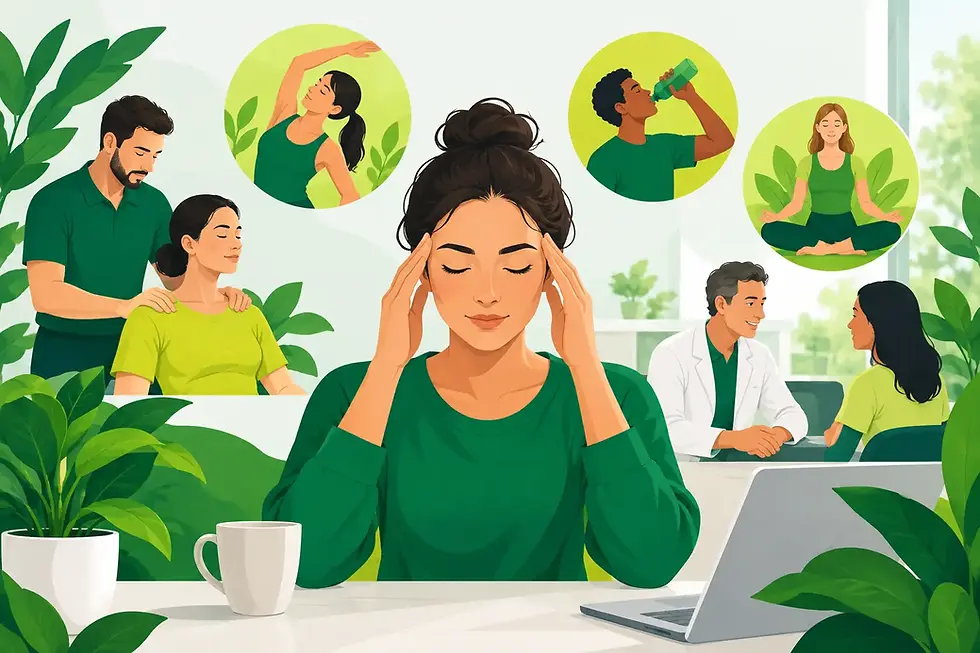
Workplace Back Pain Example: What Actually Helps

By 3 pm, the familiar ache starts to build across the lower back. Standing up from the desk feels stiff, the drive home is uncomfortable, and an evening walk is often the last thing you feel like doing. This workplace back pain example is common among busy professionals, but it is rarely caused by one bad chair or a single day of poor posture.
Back pain linked to work usually reflects a combination of sustained positions, reduced movement, workload pressure, sleep, previous injuries and the amount of physical activity your body is currently used to. The encouraging news is that the back is adaptable. With the right assessment and a realistic plan, most people can improve comfort, confidence and day-to-day movement without pursuing a perfect posture.
A workplace back pain example: the busy project manager
Consider a typical, fictional example. A 42-year-old project manager works from home three days a week and commutes to the office on the others. Her working day is packed with video calls, deadlines and long periods of concentrated screen work. She starts the day feeling reasonably well, but by late afternoon she has a dull ache across her lower back and tightness around her hips.
At first, she tries sitting more upright. Then she buys a more expensive desk chair. Both help briefly, but the symptoms return after a demanding week. She becomes concerned that her posture is causing permanent damage, so she moves less and avoids the gym sessions she previously enjoyed.
This pattern does not mean her spine is weak or damaged. It may mean that the tissues around her lower back are becoming irritated by staying in one position for too long, while stress, poor sleep and reduced exercise lower her capacity to tolerate that load. If she also spends long periods leaning towards a laptop, mechanical tension may develop through the upper back, neck and shoulders, sometimes contributing to headaches too.
The aim is not to blame the desk, the chair or the person sitting in it. It is to understand what has changed, identify the movements that feel restricted or sensitive, and gradually restore the back's tolerance for everyday life.
Why desk-related back pain can persist
Static sitting is often the bigger issue
There is no single correct sitting position that must be held all day. Even a well-organised workstation can become uncomfortable when the body stays still for hours. Muscles and joints generally respond better to regular variation: sitting, standing, walking to make a drink, taking calls on your feet, or changing position during focused work.
A supportive chair and screen set-up can reduce unnecessary strain, particularly if you find yourself twisting to view a second screen or repeatedly looking down at a laptop. However, equipment is only one part of the picture. The most ergonomically impressive set-up cannot fully compensate for a diary with no breaks.
Stress changes how pain feels
A deadline does not directly injure the back, but prolonged stress can increase muscle guarding, disrupt sleep and make the nervous system more alert to discomfort. This can make a familiar ache feel more intrusive and harder to settle. Recognising this is not to suggest that pain is imaginary. It is a practical acknowledgement that pain is influenced by both the body's tissues and the wider demands placed on it.
Small changes to workload rhythms can matter. A two-minute pause between meetings, a short walk after a difficult call or a protected lunch break may be more useful than waiting for one long stretch session at the end of the day.
Reduced capacity can create a cycle
When pain makes activity feel risky, it is understandable to stop doing the things that usually keep you mobile. Yet avoiding all bending, lifting or exercise can gradually make these movements feel less familiar and more threatening. For some people, the answer is a return to strengthening work. For others, it starts with regular walks and gentle mobility. The appropriate pace depends on your symptoms, medical history and current fitness.
General health also plays a supporting role. Regular meals, adequate hydration and enough protein, fibre and micronutrients help support energy, recovery and physical activity. Dietary change is not a cure for mechanical back pain, but when low energy, digestive symptoms or weight changes are also affecting daily life, addressing these factors can make a rehabilitation plan more sustainable.
Practical changes to try over the next fortnight
Make your workstation fit your task
Set your main screen so the top is roughly at eye level, and position it directly in front of you. Keep the keyboard and mouse close enough that your elbows can stay comfortably by your sides rather than reaching forwards. If you work from a laptop for extended periods, a separate keyboard and mouse, alongside a laptop stand, can make a noticeable difference.
Your feet should feel supported, whether on the floor or a footrest. Adjust the chair so you can sit close enough to the desk without rounding forwards. These are starting points, not rigid rules. If a suggested position increases discomfort, alter it. Comfort and regular movement matter more than forcing yourself into a prescribed shape.
Build movement into the working day
Rather than setting an ambitious target that disappears during a busy week, attach brief movement to habits already in your diary. Stand when a meeting ends. Walk while waiting for the kettle. Use the stairs once during the day. A short change of position every 30 to 60 minutes is often more achievable, and more helpful, than remaining seated until the pain forces a break.
If you have been avoiding exercise, begin below the level that aggravates symptoms. This might mean a ten-minute walk, a few controlled sit-to-stands, or a gentle return to exercises you have previously enjoyed. Mild stiffness during or after movement can be normal, particularly when you are rebuilding capacity. A sharp escalation of pain, spreading symptoms or a flare that remains significantly worse for several days deserves professional advice.
Respond to a flare with calm, not complete rest
During a painful day, it can help to reduce aggravating activity temporarily, use comfortable positions and keep gently moving where possible. Heat may provide short-term relief for some people. Complete bed rest is rarely the best answer for routine mechanical back pain, as the body usually benefits from gradual, tolerable activity.
Try to notice patterns without becoming hypervigilant. Does discomfort increase after three hours of uninterrupted sitting? Does it settle after a short walk? Does a poor night's sleep make the next day harder? These observations are useful information for tailoring a plan.
When osteopathy may be helpful
If back pain is recurring, affecting work or preventing you from returning to usual activity, an osteopathic assessment can provide clarity. At Hartwood Health, we look at how the back is moving alongside the wider context: work set-up, activity levels, previous injuries, stress, sleep and the specific tasks that provoke symptoms.
Treatment may include hands-on techniques to ease mechanical restriction and muscle tension, but it should not end there. A useful plan also includes clear advice, movement rehabilitation and a graded route back to the activities that matter to you, whether that is a full day at the desk, lifting children, playing sport or simply sleeping more comfortably.
For patients in and around Fleet, hands-on osteopathic care offers an opportunity to assess persistent lower back pain, neck pain, sciatica and related musculoskeletal symptoms in person. The goal is not a dependency on treatment. It is to help you understand your symptoms and build confidence in your body's capacity to move.
Symptoms that need urgent medical attention
Most workplace-related back pain is not serious, but some symptoms should be assessed urgently. Seek prompt medical help if back pain occurs alongside:
new difficulty controlling your bladder or bowels
numbness around the genitals, buttocks or inner thighs
significant or worsening weakness in one or both legs
fever, unexplained weight loss, or feeling generally unwell
pain after a significant accident, or pain that is severe and unrelenting at rest
If you are unsure, it is always sensible to seek medical advice rather than trying to manage concerning symptoms alone.
A sore back at the end of a working day is not a personal failure, and it is not proof that your desk job has ruined your posture. It is a signal worth listening to with curiosity. A few well-chosen changes, supported by expert assessment when needed, can help work feel less like something your body has to recover from.
Joined-Up Care for Lasting Physical Freedom
At Hartwood Health, we look beyond the immediate symptom to treat the person attached to it. True physical resilience requires a balance between structural alignment, everyday biomechanics, and systemic health.
Our Osteopathy Team specialises in relieving acute pain and restoring mobility for busy professionals and active adults alike. By working closely alongside our clinical dietitians and other wellbeing practitioners, they provide a truly "joined-up" approach to physical health.
Visit our hands-on clinic in Fleet to start your journey back to comfortable, confident movement.