Does Posture Cause Headaches? What Helps
A headache that builds through an afternoon of video calls can feel very different from one that arrives first thing in the morning. If you have noticed a pattern around desk work, driving or scrolling on your phone, you may be asking: does posture cause headaches? Posture can contribute, particularly when it places sustained demand on the neck, upper back and jaw. But it is rarely the whole story.
A helpful approach is to think less about finding one ‘perfect’ posture and more about how your body is coping with the positions, stresses and movement demands of your day. Headaches are often multifactorial. Sleep, hydration, stress, visual strain, meal patterns, workload and previous neck pain can all influence how sensitive the system becomes.
Does posture cause headaches, or just neck pain?
Posture does not directly cause every headache, and sitting with rounded shoulders does not mean anything is permanently damaged. Our bodies are adaptable and can tolerate a wide variety of positions. The issue is more often duration and load: staying in one position for too long, particularly if you are already tired or stressed, can create mechanical tension in the muscles and joints around the neck, shoulders and upper back.
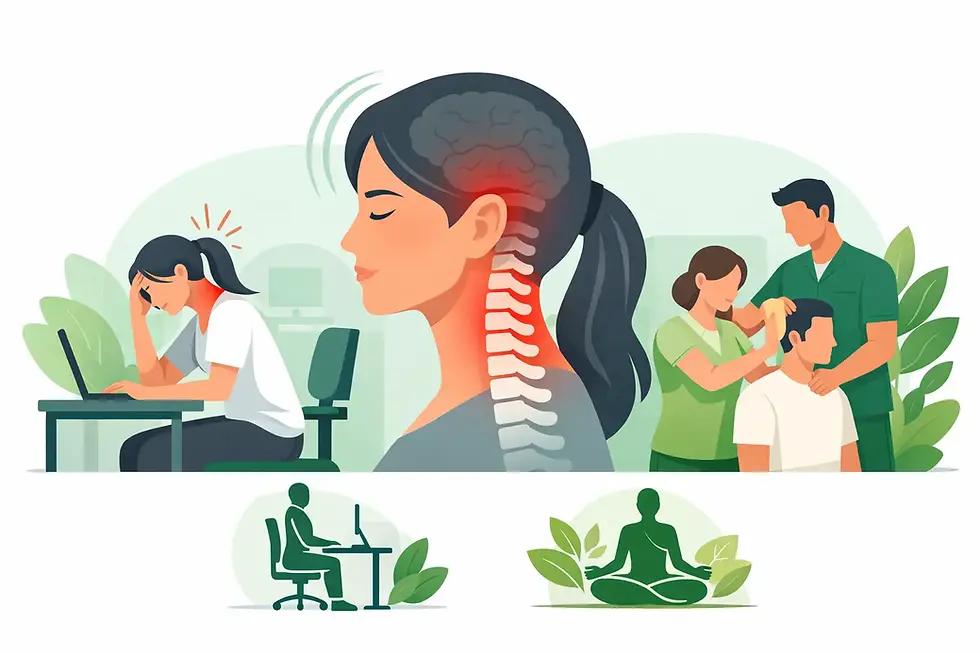
The head is relatively heavy, and the neck works continuously to support it. When your head is held forward for prolonged periods, such as when looking down at a laptop or phone, the muscles at the back and sides of the neck may have to work harder. This can lead to aching, stiffness and tenderness that refers pain upwards towards the temples, forehead or behind the eyes.
This pattern is commonly associated with tension-type headaches or cervicogenic headaches. A cervicogenic headache is pain felt in the head but linked to structures in the neck. It may begin at the base of the skull, often on one side, and travel towards the temple or eye. Neck movement or a sustained position can aggravate it.
That said, a headache that happens after a busy workday is not automatically a posture problem. Migraine, for example, is a neurological condition with different mechanisms. Neck tension may be present before or during a migraine, but it may be part of the migraine process rather than the original cause. This distinction matters because the most effective plan depends on the type of headache involved.
Why desk work can make headaches more likely
The modern desk is not inherently harmful. The difficulty tends to come from prolonged stillness combined with concentration. When we are focused on a deadline, we often breathe more shallowly, clench the jaw, lift the shoulders and forget to change position. Add poor sleep, skipped lunch or too little water, and the threshold for a headache may be lower.
Screen set-up can play a role too. If a monitor is too low, too far away or poorly positioned, you may repeatedly lean forwards or twist your neck to see it clearly. Laptop-only work creates an additional challenge because the screen and keyboard are attached: placing the keyboard at a comfortable height can leave the screen too low, while raising the screen can make typing awkward.
Visual strain is another consideration. Squinting at small text, working in glare or using an out-of-date prescription can encourage a forward-head position and make headaches more frequent. If headaches regularly accompany eye strain, an eye test may be as useful as changing your chair.
Stress also has a physical expression. It can increase muscle tone, disrupt sleep and alter pain sensitivity. This is not to suggest symptoms are ‘all in your head’. It means the nervous system, muscles, daily habits and emotional load are connected. A plan that only addresses your workstation may miss important contributors.
Signs your headache may be linked to postural tension
A posture-related component becomes more likely when headaches develop after long periods at a desk, in the car or on a phone, and ease after moving about. You may also notice a stiff neck, tight shoulders, discomfort around the base of the skull, or pain that is reproduced by certain neck movements.
Some people wake with a headache because their pillow, sleeping position or jaw clenching leaves the neck and jaw muscles irritated overnight. Others feel fine in the morning but gradually tighten through the day. Keeping a brief record for one or two weeks can reveal useful patterns: note the timing, location, intensity, sleep, stress levels, food and fluid intake, and activities before the headache began.
The aim is not to monitor every detail obsessively. It is simply to give you and your clinician a clearer picture of the pattern.
Practical ways to reduce postural headaches
Small, regular changes usually work better than trying to hold yourself rigidly upright all day. The best posture is often the next posture - one that changes before your neck and shoulders have been working continuously for hours.
Start by making your workstation easier to use. Position the top third of your main screen roughly at eye level, place it directly in front of you, and keep the keyboard and mouse close enough that you are not reaching forwards. If you use a laptop for extended work, a separate keyboard and mouse can allow you to raise the screen. Aim for your feet to feel supported and your forearms to rest comfortably, but avoid treating these guidelines as a test you must pass perfectly.
Build movement into the day. A minute or two of walking, shoulder rolls, gentle neck movement or standing at least once an hour can reduce accumulated tension. A calendar reminder can help initially, especially during demanding periods. Short breaks are not lost productivity if they prevent the familiar late-afternoon headache that affects the rest of your evening.
Try a simple reset when you notice tension building. Let your shoulders drop, gently turn your head side to side within a comfortable range, take a few slower breaths and look away from the screen into the distance. Avoid forcefully stretching your neck or repeatedly cracking it in pursuit of relief. If movement causes sharp pain, dizziness or worsening symptoms, stop and seek advice.
Your wider routine matters as well. Regular meals can support steadier energy levels, while adequate hydration may reduce a common headache trigger. Caffeine can help some people and trigger headaches in others, particularly when intake is inconsistent. Good-quality sleep, paced exercise and manageable stress strategies are not separate from musculoskeletal care - they affect how well the body recovers from physical load.
When hands-on assessment can help
If headaches persist despite sensible changes, an individual assessment can be valuable. An osteopath can assess neck, upper-back and shoulder movement, identify areas of mechanical sensitivity and consider how your work, exercise, sleep and previous injuries may be contributing. Treatment may include hands-on techniques, tailored movement advice and a rehabilitation plan designed to restore confidence in everyday movement.
At Hartwood Health, we take a whole-person view rather than blaming a single posture. For someone with recurrent headaches, that may mean exploring desk mechanics and neck function alongside sleep, stress, jaw tension, activity levels and the practical demands of work and family life. The goal is not a temporary fix, but a realistic plan that makes flare-ups less frequent and easier to manage.
When a headache needs urgent medical attention
Most headaches are not caused by a serious problem, but some symptoms need prompt assessment. Seek urgent medical help for a sudden, severe headache that reaches maximum intensity quickly, especially if it is unlike anything you have experienced before. You should also seek urgent advice if a headache follows a head injury, or occurs with confusion, fainting, fever and a stiff neck, seizures, new weakness or numbness, difficulty speaking, loss of vision, or a new drooping face.
Arrange a medical review if headaches are becoming more frequent or severe, regularly wake you from sleep, begin after the age of 50 without a clear explanation, occur during pregnancy or after childbirth, or are changing in character. Frequent reliance on pain relief can itself contribute to medication-overuse headaches, so it is worth discussing this with a GP or pharmacist rather than simply increasing the dose or frequency.
Posture can be one useful piece of the headache puzzle, especially when neck tension and prolonged desk work are involved. Be kind to your body’s need for movement, look for patterns rather than blame, and seek personalised support if headaches are starting to limit your work, sleep or enjoyment of daily life.
Joined-Up Care for Lasting Physical Freedom
At Hartwood Health, we look beyond the immediate symptom to treat the person attached to it. True physical resilience requires a balance between structural alignment, everyday biomechanics, and systemic health.
Our Osteopathy Team specialises in relieving acute pain and restoring mobility for busy professionals and active adults alike. By working closely alongside our clinical dietitians and other wellbeing practitioners, they provide a truly "joined-up" approach to physical health.
Visit our hands-on clinic in Fleet to start your journey back to comfortable, confident movement.