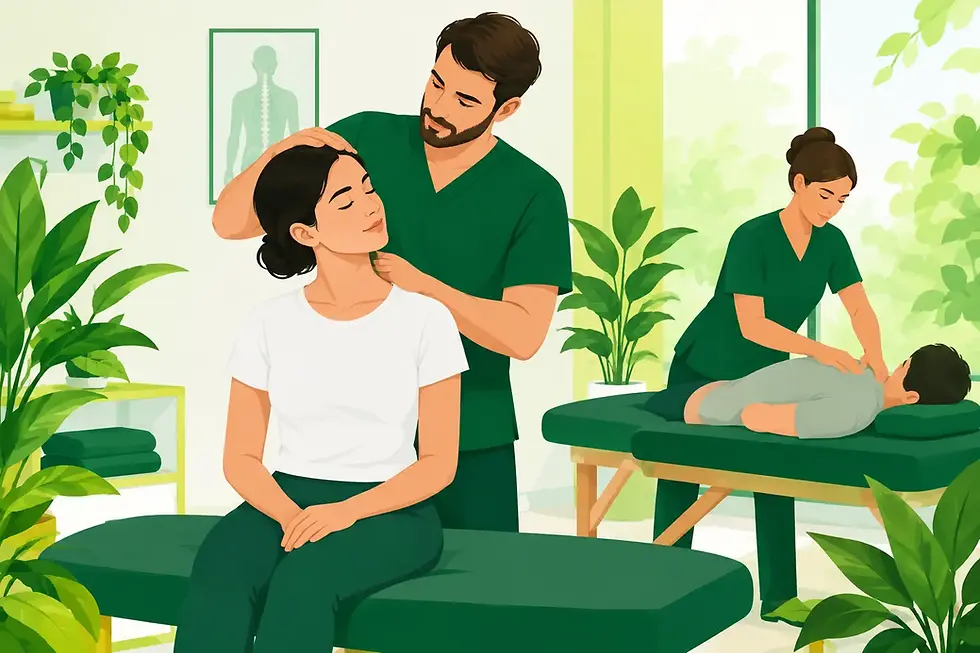
Is Osteopathy Painful? What Treatment Feels Like

When your back catches as you get out of the car, or a persistent headache follows another long day at the desk, booking hands-on treatment can feel like a sensible next step. But is osteopathy painful? For most people, treatment should feel manageable and purposeful, not like something to endure. You may notice pressure, stretching or brief tenderness around an irritated area, but your comfort should guide every stage of the appointment.
At Hartwood Health, we take pain seriously. It is useful information from the body, not a test of how well you are coping. Our role is to understand what may be driving your symptoms, explain the options clearly and choose a treatment plan that feels appropriate for you.
Is osteopathy painful during treatment?
Osteopathy is not designed to hurt. Some techniques can create temporary discomfort, particularly when muscles and joints are already sensitive, stiff or guarding after injury. However, there is an important difference between a tolerable sensation and pain that feels sharp, alarming or makes you tense up further.
Many people describe treatment as firm pressure, a stretch through a restricted area, or a feeling of release as the body begins to move more freely. If you have acute lower back pain, sciatica, neck pain or a sports injury, the affected tissues may be tender before treatment even starts. In these cases, we usually begin gently and work within the range your body can tolerate.
You are always in control. An osteopath should check in with you, adjust their pressure or approach when needed, and stop if a technique does not feel right. You do not need to be brave, push through, or wait until something is unbearable to say so. A simple “that feels too much” gives us the information we need to adapt your care.
Why an area can feel tender
Pain is influenced by more than the condition of one muscle or joint. A long period of poor sleep, a stressful week, reduced activity, an old injury or hours spent in one desk position can all make the nervous system more protective. That can mean a shoulder, lower back or jaw feels more sensitive to touch than expected.
This does not necessarily mean damage is worsening. Often, it reflects mechanical tension and a system that has been working hard to protect you. Gentle manual therapy, movement advice and a gradual return to confidence-building activity can help settle this sensitivity over time.
What techniques might feel like
Osteopathy uses a range of hands-on techniques rather than one fixed treatment. What we use depends on your symptoms, medical history, examination findings and goals. Someone with a recent flare-up of back pain may need a very different approach from someone building strength after a recurring running injury.
Soft tissue work involves pressure and movement through muscles and connective tissue. It can feel similar to a focused massage, although it is guided by assessment rather than simply aiming for relaxation. Tight areas can feel tender, but the pressure should remain adjustable.
Joint mobilisation uses gentle, repeated movements to help a stiff joint move more comfortably. You may feel stretching or pressure, but it should not be forceful. Some osteopaths may also use a quick, controlled technique that can produce a popping sound. This is not necessary for every patient or every problem, and it is never a measure of whether treatment has worked. We will explain any recommended technique beforehand and only proceed with your informed consent.
Treatment may also include guided movement, breathing work or practical advice on pacing activities. These approaches can be particularly valuable when pain has affected your confidence in moving. The aim is not to chase a dramatic sensation in the treatment room. It is to help you move, work, exercise and rest with greater ease outside it.
Can you feel sore after osteopathy?
A mild, short-lived ache or fatigue after treatment is possible, especially after an initial appointment or when a painful area has been inactive for some time. People sometimes compare it to the feeling after unfamiliar exercise. This commonly settles within 24 to 48 hours.
Soreness is not a requirement for progress, though. Some people feel looser straight away, while others notice gradual change over several days. Your response can vary according to the type of problem, how long it has been present, your activity levels and how sensitised the area is.
After an appointment, it can help to keep gently moving rather than becoming completely still. A short walk, your prescribed exercises, regular position changes and a usual evening routine are often more helpful than trying to rest rigidly. We will give advice that fits your situation, including whether to modify work, training or lifting for a short period.
If pain becomes significantly worse, feels new or unusual, or does not settle as expected, contact your osteopath for guidance. You should seek urgent medical help for symptoms such as sudden weakness, loss of bladder or bowel control, numbness around the groin or saddle area, severe unrelenting pain, chest pain, or feeling generally very unwell. These symptoms need prompt medical assessment rather than hands-on treatment.
How we make osteopathy more comfortable
A good first appointment is not rushed. Before any treatment, we discuss your symptoms, previous injuries, health history, work demands, activity and what you want to get back to doing. For a desk-bound professional, that may mean sitting through meetings without neck tension or avoiding the familiar afternoon headache. For an active parent, it may be lifting a child or getting back to weekend walks without bracing for back pain.
We then assess movement and, where appropriate, the relevant joints, muscles and nerves. This helps us decide whether osteopathy is suitable and which techniques are likely to be useful. Sometimes the right next step is advice, exercise-based rehabilitation, GP review or another health professional, rather than more hands-on treatment.
Throughout care, clear communication matters. Tell us if you are anxious about being touched, have had a difficult treatment experience before, dislike a particular position, or prefer a gentler approach. These preferences are clinically relevant. They help us provide care that respects both your physical comfort and your sense of safety.
Pain thresholds are personal
There is no universal pain threshold, and comparing yourself with someone else is rarely helpful. A person who has had years of recurring sciatica may respond differently from someone with a new neck strain. Equally, two people with similar scan findings can have very different levels of pain and day-to-day limitation.
This is why a whole-person approach matters. Biomechanics are part of the picture, but so are sleep, stress, work set-up, activity patterns and recovery capacity. For some patients, dietary support may also form part of a wider plan for energy, general health or long-term resilience. Joined-up care is about making those connections without assuming there is one simple cause or one quick fix.
When discomfort is not the aim
There is a common belief that treatment has to be intense to be effective. It does not. Aggressive pressure can sometimes make a sensitive area feel more guarded, particularly during an acute flare-up. The most useful treatment is the amount your body can respond to well, combined with a plan that supports progress between appointments.
That may mean starting with gentle techniques and simple movements, then progressing towards strength, mobility or return-to-sport goals as symptoms settle. It may also mean addressing habits that repeatedly load the same area, such as a poorly arranged workstation, long drives without breaks or doing too much too soon after a painful episode.
If you are worried about pain, say so when you book and again at the start of your appointment. A thoughtful osteopathy consultation should leave you feeling heard, informed and more confident about your next step - whether that is hands-on care, a tailored exercise plan, or simply the reassurance to start moving again.
Joined-Up Care for Lasting Physical Freedom
At Hartwood Health, we look beyond the immediate symptom to treat the person attached to it. True physical resilience requires a balance between structural alignment, everyday biomechanics, and systemic health.
Our Osteopathy Team specialises in relieving acute pain and restoring mobility for busy professionals and active adults alike. By working closely alongside our clinical dietitians and other wellbeing practitioners, they provide a truly "joined-up" approach to physical health.
Visit our hands-on clinic in Fleet to start your journey back to comfortable, confident movement.