
Sports & Overuse Injury Recovery: What Works
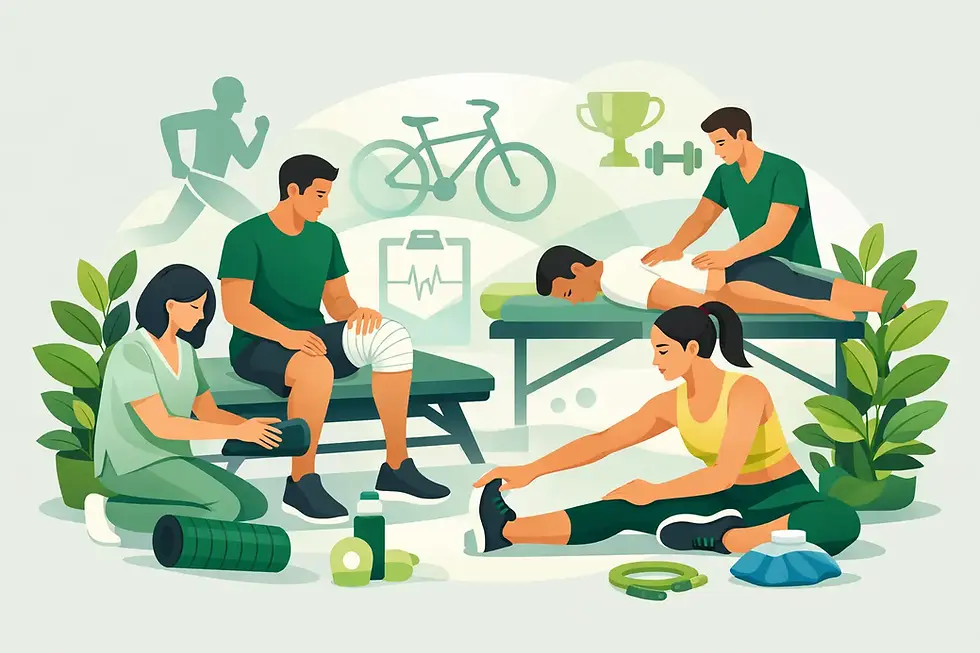
That familiar ache at the outside of the knee on a run, the sore shoulder after a weekend of tennis, or the heel pain that is worst with your first few steps can be frustrating precisely because it interrupts something you enjoy. Sports & overuse injury recovery is rarely about finding one magic treatment or simply stopping all activity. It is about understanding why the tissue became irritated, then rebuilding its capacity to cope with the demands you place on it.
For many active adults, an injury arrives during a busy period: training has increased, work deadlines have affected sleep, meals have become less regular, or a holiday has involved more walking than usual. None of these factors means you have done something wrong. They are useful clues that help us make a practical plan.
Why overuse injuries happen
An overuse injury develops when the load placed on a muscle, tendon, joint or bone exceeds its current ability to recover and adapt. Load does not only mean a heavy barbell. It can be the accumulated effect of running mileage, hill walks, repeated serves, long hours at a desk, poor sleep, stress, or a sudden return to exercise after time away.
Common examples include Achilles tendinopathy, plantar heel pain, runner's knee, shin pain, tennis elbow and rotator cuff-related shoulder pain. Symptoms can come on gradually, rather than after a single clear incident. You may feel stiff at the start of movement, improve once warmed up, then ache later that day or the following morning.
This does not mean the affected area is weak, damaged beyond repair, or needs to be kept completely still. Bodies are adaptable. Recovery is usually about finding the right amount of movement - enough to encourage strength and confidence, but not so much that symptoms continue to flare.
Sports and overuse injury recovery starts with the right assessment
The location of pain is not always the full story. Knee discomfort, for example, may be influenced by running volume, hip strength, ankle mobility, footwear, recovery between sessions and how much sitting you do during the week. A shoulder problem may relate to gym technique, repeated overhead activity, neck and upper-back tension, or an abrupt increase in training.
A thorough assessment considers your symptoms, activity history, work routine, sleep and goals. For a keen runner, the goal might be completing a half marathon. For someone with a demanding office role, it may be returning to a weekly five-a-side game without spending Monday morning stiff and guarded. Both deserve a plan that fits real life.
At Hartwood Health, osteopathic assessment looks at how you move as a whole, not just the painful point. Hands-on treatment may help reduce mechanical tension and restore easier movement where appropriate, but it works best alongside a progressive rehabilitation plan. The aim is not passive treatment every week. It is to help you understand what your body needs and regain trust in it.
When pain needs prompt medical attention
Most gradual sports injuries are manageable with the right clinical guidance, but some symptoms need urgent assessment. Seek medical advice promptly if you cannot bear weight after an injury, have marked swelling or deformity, experience severe night pain or fever, notice numbness or progressive weakness, or have pain after a significant fall or collision. Sudden calf swelling, warmth and breathlessness also require urgent medical attention.
Rest is useful, but complete rest is rarely the full answer
When pain first appears, reducing or adapting the aggravating activity can settle symptoms. That might mean pausing sprint sessions, shortening walks, using flatter routes, reducing the weight on a lift, or changing the number of tennis sessions for a few weeks. This is relative rest, not necessarily no movement at all.
Complete rest for too long can reduce fitness, strength and confidence. It can also make the return to activity feel more daunting. Where it is safe to do so, we usually look for comfortable alternatives. A runner with an irritable tendon may tolerate cycling or swimming. Someone managing an elbow problem may keep lower-body training going while modifying gripping exercises. The best option depends on the diagnosis, severity and your response over the next 24 hours.
A helpful guide is to monitor symptoms during exercise and the following day. Mild discomfort that stays manageable and settles back to your usual level may be acceptable during rehabilitation. Pain that builds sharply, changes your movement significantly, or leaves you noticeably worse the next morning suggests the dose was too high.
Rebuild capacity with progressive loading
Tendons, muscles and bones respond to appropriately graded load. This is why rehabilitation is often more effective than endlessly stretching a painful area or relying on a massage gun. The exact exercises matter, but the progression matters more.
Early rehabilitation may focus on controlled, lower-load movements that improve tolerance without provoking a flare. As symptoms settle, this can progress towards strength work, balance, impact drills, sport-specific tasks and finally the demands of training or competition. A calf that needs to cope with a gentle jog must later cope with hills, acceleration and repeated push-off. A shoulder used for swimming needs more than basic band exercises before it is ready for a full session in the pool.
Consistency beats occasional heroic sessions. Two or three manageable strength sessions each week can create meaningful change, especially when paired with sensible adjustments to sport. We also account for the activities that are easy to overlook: carrying a toddler, commuting on foot, gardening, moving house or a long day standing at an event. Your recovery plan needs to fit your total weekly load, not only time spent in the gym.
Return to sport is a progression, not a test
It is tempting to wait until you feel completely symptom-free, then try your previous workout. This often produces a setback. A more reliable approach is to return in stages. Start with a version of the activity your body can currently tolerate, repeat it enough to see how you respond, then add one variable at a time - duration, intensity, hills, weight, speed or frequency.
For example, a return to running might begin with short run-walk intervals on level ground, rather than an immediate five-mile run. A return to strength training could mean reducing range, resistance or volume before gradually restoring all three. There is no universal timetable because healing and tolerance vary. The important measure is a steady upward trend in function, not perfection at every session.
Nutrition, sleep and stress affect recovery too
Rehabilitation is physical, but it does not happen in isolation. Training adaptation and tissue repair require enough energy, protein, carbohydrates, vitamins and minerals. Under-fuelling is common in people who are trying to lose weight, training around a hectic career, or simply skipping meals between meetings. It can make fatigue more pronounced and leave the body with less available resource for recovery.
Protein spread across regular meals supports muscle repair and maintenance. Carbohydrate also has a role, particularly around demanding training, because it supports energy availability and helps avoid the cycle of pushing through sessions when depleted. There is no need for restrictive rules or expensive supplements as a first step. A dietitian can help tailor a realistic approach around your sport, health needs, appetite and family routine.
Sleep matters for similar reasons. Poor sleep can heighten pain sensitivity, reduce concentration and make it harder to judge training load. Stress does not mean pain is "all in your head". It means your nervous system and recovery capacity are under greater pressure. A short walk, a protected wind-down routine, regular meals and a more realistic training week can all be clinically useful parts of a plan.
Avoid the common recovery traps
The most common trap is trying to train through steadily worsening pain because an event is approaching. The second is doing nothing for several weeks, then returning at full intensity. Another is chasing a stream of online exercises without knowing whether they match the problem, your technique or your current capacity.
Passive treatments can provide welcome relief, particularly when pain and muscle guarding are limiting movement. But relief should create an opportunity to move better and rebuild strength, rather than become the only strategy. Equally, footwear, ergonomic changes or a supportive brace may be helpful tools, but they are rarely a replacement for addressing load and capacity.
If symptoms are not improving, are recurring with every return to activity, or are affecting normal walking, sleep or work, it is worth getting a clearer assessment. Early support can reduce the frustrating cycle of stop-start training and help you make decisions with confidence.
The aim is not simply to get back to the activity that hurt. It is to return with a better understanding of your body, a sustainable training rhythm and the confidence to keep moving for the long term.
Joined-Up Care for Lasting Physical Freedom
At Hartwood Health, we look beyond the immediate symptom to treat the person attached to it. True physical resilience requires a balance between structural alignment, everyday biomechanics, and systemic health.
Our Osteopathy Team specialises in relieving acute pain and restoring mobility for busy professionals and active adults alike. By working closely alongside our clinical dietitians and other wellbeing practitioners, they provide a truly "joined-up" approach to physical health.
Visit our hands-on clinic in Fleet to start your journey back to comfortable, confident movement.


Comments