
Shoulder Biomechanics and Everyday Movement
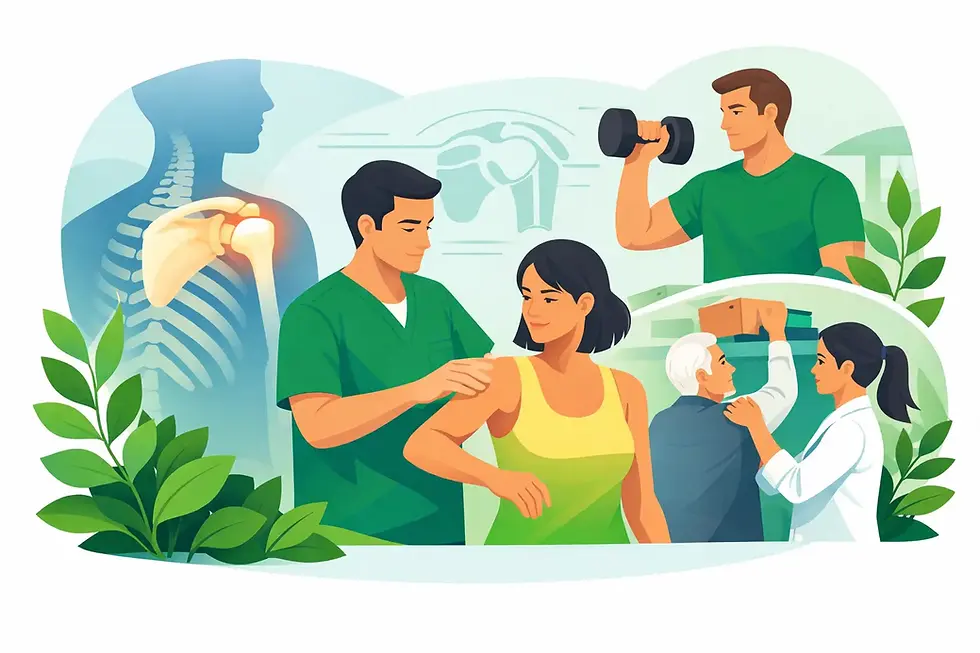
Your shoulder may first complain when you reach for the back seat, put on a coat or lift a suitcase into the car. These ordinary movements rely on finely timed shoulder biomechanics: the way several joints, muscles and nerves work together to position your arm. When that teamwork becomes less efficient, the result can be pain, stiffness, weakness or a sense that the shoulder is simply not moving as freely as it used to.
For desk-based professionals, shoulder discomfort is often part of a wider picture that includes neck tension, headaches, poor sleep or long periods spent in one position. For active adults, it may appear after a change in training, gardening, decorating or a return to sport. Understanding the mechanics helps us move beyond the idea of a single "bad" shoulder and towards a sensible plan for recovery.
What shoulder biomechanics actually means
The shoulder is designed for range rather than absolute stability. It allows the hand to reach overhead, across the body, behind the back and out to the side, but this freedom requires ongoing control.
The ball-and-socket joint between the upper arm bone and shoulder blade is only one part of the system. The collarbone joints, ribcage, upper back, neck and shoulder blade all influence how your arm moves. In clinical terms, the shoulder blade glides over the ribcage at the scapulothoracic joint. It is not a traditional joint with a joint capsule, but its movement is crucial.
When you raise your arm, the shoulder blade should rotate and tilt while the upper arm bone moves in its socket. Muscles including the rotator cuff, deltoid, serratus anterior and trapezius help guide this process. The rotator cuff does not just provide strength. It helps keep the ball of the upper arm centred as larger muscles generate movement.
This is why a shoulder problem may not be caused solely by what is happening at the point of pain. Restricted movement in the upper back, persistent neck muscle tension, reduced shoulder blade control or a sudden increase in load can all alter the way the shoulder shares work.
Why shoulder pain can develop
Shoulders are adaptable. They usually tolerate varied activity well, including periods of less-than-perfect posture. Sitting at a desk does not permanently damage a shoulder, and there is no single ideal position that everyone must hold all day. However, remaining still for hours can leave muscles feeling guarded and joints less ready for an unexpected lift, reach or gym session.
Pain can also develop when the demands placed on the shoulder outpace its current capacity. This might be a new strength programme, a busy week of DIY, repetitive overhead work or carrying a young child more often. Equally, it can follow a fall, an awkward pull or a sports injury.
Sometimes there is a clear tissue irritation, such as tendinopathy affecting a rotator cuff tendon. In other cases, scans may show age-related changes that do not fully explain the symptoms. Imaging can be helpful in the right circumstances, but it does not always tell us how confidently or comfortably a person can move. A good assessment considers your pain pattern, strength, range of movement, work demands, activity goals and medical history.
Stress and poor sleep can matter too. They do not make shoulder pain imaginary. They can increase muscle tension, make the nervous system more sensitive to discomfort and reduce the energy available for recovery. This is part of a whole-person view of musculoskeletal health, not a judgement about how you are coping.
Common patterns we see in shoulder biomechanics
Pain when reaching overhead
Pain during reaching, swimming, serving in tennis or placing items on a high shelf can reflect a shoulder that is struggling to manage load in that position. It may involve rotator cuff irritation, reduced upper-back movement, weakness in specific ranges or a recent spike in activity. The appropriate response depends on the individual. Complete rest is rarely the only answer, but repeatedly pushing sharply painful movements is not usually helpful either.
Pain at the front or side of the shoulder
Pain around the outer upper arm is common and can be linked to the tendons around the shoulder. Pain at the front may also relate to the biceps tendon, chest muscles or the way the shoulder blade and upper arm are moving together. Location provides a clue, but it is not a diagnosis on its own.
Stiffness that affects dressing or reaching behind you
Difficulty fastening a bra, reaching a back pocket or putting on a coat may signal a meaningful loss of shoulder range. A frozen shoulder, for example, can cause progressively painful stiffness and deserves a tailored plan. Other causes of restricted movement include joint irritation, protective muscle guarding or reduced movement through the upper back.
Shoulder pain with neck symptoms
The neck and shoulder often share the workload. Pain, tingling or weakness travelling down the arm may sometimes involve irritation of nerves in the neck rather than a local shoulder problem alone. This is one reason an assessment should look beyond the shoulder joint itself.
What helps restore easier movement
The goal is not to chase a perfectly symmetrical posture or force the shoulder into a position it cannot tolerate. It is to rebuild comfortable movement, strength and confidence in the activities that matter to you.
Early on, reducing aggravating load can be sensible. That may mean temporarily changing the way you lift, breaking up long desk sessions, lowering the intensity of overhead exercise or using both hands for heavier tasks. This is adaptation, not failure. The shoulder still benefits from gentle, tolerable movement so that it does not become increasingly guarded.
As symptoms settle, progressive exercise is often central to recovery. The best programme is specific to your presentation, but may include controlled shoulder range work, rotator cuff strengthening, shoulder blade exercises and upper-back mobility. A useful programme is not necessarily complicated. Consistency, suitable technique and gradual progression matter more than collecting endless exercises online.
Strengthening should also reflect your real life. Someone who wants to return to tennis needs preparation for serving and repeated reaching. A parent may need confidence lifting and carrying. A professional who works at a laptop may benefit from movement breaks, a more practical workstation set-up and exercises that improve tolerance for their working day. The right dose will vary: too little challenge may not build capacity, while too much too soon can flare symptoms.
How osteopathic assessment can help
At Hartwood Health, osteopathic care begins by listening carefully to how your symptoms affect daily life. We assess the shoulder, but also consider the neck, thoracic spine, ribcage and shoulder blade, alongside relevant lifestyle and activity factors. This gives us a clearer picture of what may be contributing to mechanical tension and reduced movement.
Hands-on treatment may help reduce pain and improve comfort for some people, particularly when used alongside active rehabilitation. Depending on your assessment, this could include joint articulation, soft-tissue techniques or guided movement. It is not presented as a quick fix or a way to "put" a body part back where it belongs. Lasting progress usually comes from combining symptom relief with a plan that helps you move and load the shoulder more confidently.
Where nutrition, recovery or energy availability may be affecting your wider health, joined-up care can be valuable. Adequate fuelling, hydration, sleep and manageable stress support tissue recovery and exercise participation. For people managing several health concerns at once, addressing these practical foundations can make a rehabilitation plan more realistic.
When to seek prompt medical advice
Most shoulder pain is not an emergency, but some symptoms need timely assessment. Seek urgent medical help after a significant injury if the shoulder looks deformed, you cannot move the arm, or there is severe swelling or sudden loss of strength. New chest pain, breathlessness, sweating or pain spreading to the jaw or arm should also be treated as urgent.
Arrange a clinical assessment if you have persistent night pain, progressive weakness, tingling or numbness, unexplained fever or weight loss, or symptoms that are not improving despite sensible activity changes. These signs do not automatically mean something serious is wrong, but they deserve proper attention.
A shoulder does not need to move perfectly to serve you well. With the right assessment, a calm approach to loading and a plan built around your actual life, it can become easier to reach, lift, work and enjoy the activities you have been missing.
Joined-Up Care for Lasting Physical Freedom
At Hartwood Health, we look beyond the immediate symptom to treat the person attached to it. True physical resilience requires a balance between structural alignment, everyday biomechanics, and systemic health.
Our Osteopathy Team specialises in relieving acute pain and restoring mobility for busy professionals and active adults alike. By working closely alongside our clinical dietitians and other wellbeing practitioners, they provide a truly "joined-up" approach to physical health.
Visit our hands-on clinic in Fleet to start your journey back to comfortable, confident movement.


Comments