
Emotional & Stress-Induced Eating: What Helps
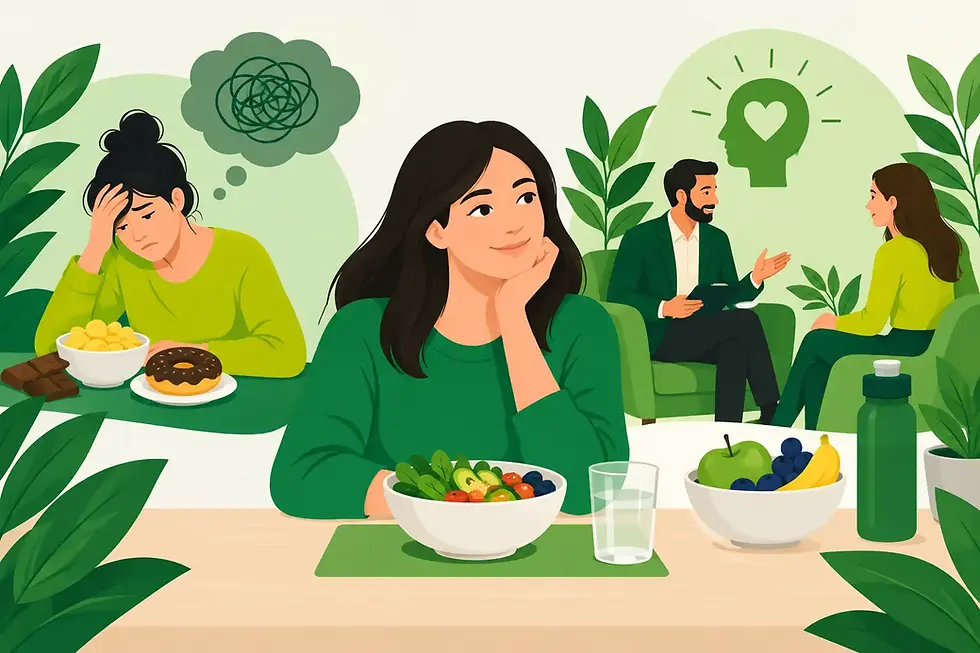
A difficult meeting ends, the children are finally in bed, or you have spent another day moving from one task to the next without a proper pause. Suddenly, food can feel like the quickest route to comfort, distraction or relief. Emotional & stress-induced eating is not a lack of willpower. It is a common human response to a nervous system that is under pressure.
For many people, the pattern brings guilt afterwards, especially when weight, gut symptoms or energy levels are already a concern. But shame rarely changes eating behaviour for the better. A more useful starting point is curiosity: what is your body asking for, what has the day demanded of you, and where might you need more support?
What emotional and stress-induced eating means
Emotional eating describes eating that is driven mainly by a feeling rather than physical hunger. Stress-induced eating is a closely related pattern, where pressure, fatigue, anxiety or overwhelm affects appetite and food choices. Some people eat more when stressed, often reaching for foods that are sweet, salty, rich or easy to eat. Others lose their appetite during the day, then feel intensely hungry and eat rapidly in the evening.
Neither response is a moral failing. Stress affects the body as well as the mind. When we are under sustained pressure, hormones including cortisol can influence appetite, cravings and blood glucose regulation. Add missed meals, poor sleep and limited time to prepare food, and it becomes much harder to make choices that feel considered.
The food itself is not usually the whole issue. A biscuit after a difficult day may be enjoyable and entirely unremarkable. The concern is when eating becomes the only reliable way to manage emotions, or when the cycle of restriction, overeating and guilt begins to affect wellbeing.
Why stress can change appetite and cravings
Our appetite is shaped by far more than hunger alone. It responds to sleep, routine, hormones, social situations, medication, digestive symptoms and the availability of food. Stress can disrupt several of these at once.
A desk-bound professional, for example, may work through lunch, rely on coffee to get through the afternoon, and arrive home depleted. At that point, a large meal or frequent grazing is not simply an issue of discipline. It may be the predictable result of insufficient energy, cognitive fatigue and a body trying to catch up.
Stress can also affect the gut-brain connection. People with IBS often notice that bloating, abdominal discomfort, urgency or altered bowel habits flare during demanding periods. In turn, unpredictable gut symptoms can make meals feel stressful. This does not mean symptoms are “all in your head”. It means the digestive system and nervous system communicate closely, and both deserve attention.
Physical discomfort can add another layer. Persistent back pain, neck tension or poor sleep from discomfort can reduce movement, interrupt routines and leave less capacity for meal planning. A joined-up approach considers these influences rather than treating food in isolation.
Spotting the pattern without judging yourself
Emotional hunger can feel urgent and specific. You may feel that only a particular food will do, and relief may be brief. Physical hunger often builds more gradually and is usually satisfied by a range of foods. In real life, though, the two frequently overlap. You can be genuinely hungry and emotionally overwhelmed at the same time.
Rather than trying to label every snack as good or bad, look for the circumstances around it. For one or two weeks, briefly note the time you ate, your hunger level, your mood and what happened beforehand. This is not a food diary for self-criticism. It is a way to identify patterns you may otherwise miss.
You may notice that cravings are strongest after long gaps between meals, following poor sleep, during a particular point in your workday, or after conflict at home. That information gives you something practical to work with.
Practical ways to reduce emotional eating pressure
The aim is not to remove comfort from food or to insist that every meal is perfectly balanced. Food has social, cultural and emotional value. The goal is to create enough regular nourishment and coping options that food does not have to carry the full burden of stress relief.
Build a steadier eating rhythm
Regular meals can make a significant difference to appetite regulation. For many adults, eating roughly every three to five hours during the day helps prevent the intense hunger that can make evenings feel out of control. The exact pattern depends on your schedule, activity, medications and health needs.
Try to include a source of protein, carbohydrate and fibre at main meals. For example, porridge with yoghurt and fruit, a jacket potato with beans and salad, or a simple evening meal with rice, vegetables and chicken, tofu or fish. These combinations support more sustained energy than relying on coffee or picking at food between meetings.
A planned afternoon snack can be especially useful if dinner is late. It does not need to be elaborate: yoghurt and fruit, oatcakes with cheese, or a banana with peanut butter can bridge the gap and reduce the sense of arriving home ravenous.
Create a pause, not a rule
When you notice the urge to eat in response to stress, a short pause can help you choose rather than react. Ask yourself: am I hungry, what am I feeling, and what would help me in the next ten minutes?
Sometimes the answer will still be food, and that is allowed. At other times, a glass of water, stepping outside, sending a message to a friend, taking five slower breaths or changing position after hours at a screen may take the edge off the stress. The purpose is not to talk yourself out of eating. It is to widen your options.
Make the easier choice genuinely easy
A demanding week is not the time to depend on elaborate meal preparation. Keep accessible foods available for the moments when time and decision-making are limited. A few reliable freezer meals, tinned beans, eggs, pre-washed vegetables, wholegrain wraps and yoghurt can turn a stressful evening into a manageable meal.
It also helps to eat sitting down when possible, away from a laptop or phone. This will not make stress disappear, but it can make it easier to notice satisfaction and reduce the automatic feeling of carrying on past comfortable fullness.
Treat sleep, movement and pain as part of the picture
Poor sleep makes appetite and cravings harder to regulate. Aim for realistic improvements rather than a perfect routine: a consistent wake-up time, less work in the hour before bed, or a wind-down activity that does not involve scrolling.
Gentle movement can also support stress regulation, digestion and mood. A short walk after work, mobility exercises between meetings or a return to activity after pain has settled can all help. If pain, recurring headaches or stiffness are limiting your movement, addressing the mechanical issue may make healthy routines feel more achievable again.
When dieting can make the cycle worse
Strict food rules often intensify emotional eating. If you have labelled certain foods as forbidden, eating them can trigger an “I have ruined it anyway” response, followed by more eating and renewed restriction the next day. This cycle is exhausting and rarely supports long-term weight management.
That does not mean nutrition changes are pointless. It means they need to be personalised, flexible and based on what you can sustain. For some people, weight change is an appropriate health goal. For others, stabilising eating patterns, improving digestive comfort or rebuilding energy is the more helpful first step. It depends on your medical history, relationship with food, symptoms and priorities.
When to seek professional support
It is worth speaking to a registered dietitian or GP if emotional or stress-related eating feels frequent, distressing or difficult to manage alone. Support can be particularly valuable if you are living with IBS, diabetes, menopause-related changes, unexplained weight change, persistent fatigue or a history of dieting that has become increasingly restrictive.
If you experience episodes of feeling unable to stop eating, compensate for eating through vomiting, laxatives or excessive exercise, or feel that food thoughts are dominating your day, seek professional help promptly. You deserve care that is compassionate and clinically informed, not more pressure to “try harder”.
At Hartwood Health, our dietitians take time to understand the wider picture: your eating pattern, gut health, work demands, sleep, movement and any physical symptoms that may be making daily life harder. Dietetic consultations are available remotely across the UK as well as in person where appropriate.
The next time stress pulls you towards food, try meeting that moment with kindness rather than criticism. A nourishing meal, a pause, and the right support can all be part of caring for yourself.
Expert Guidance from the Very First Step
At Hartwood Health, we pride ourselves on matching the right expert to the right patient. To facilitate this, our Lead Dietitian, Paula, personally oversees the intake for our dietetic services.
Paula offers a free initial consultation call to discuss your needs—whether for yourself or your child—before placing you in the care of the most suitable practitioner within our team. This ensures a seamless, integrated experience from day one. Paula’s triage and our team’s support are available both in-person and via UK-wide telehealth.
You can book a discovery call by clicking below.


